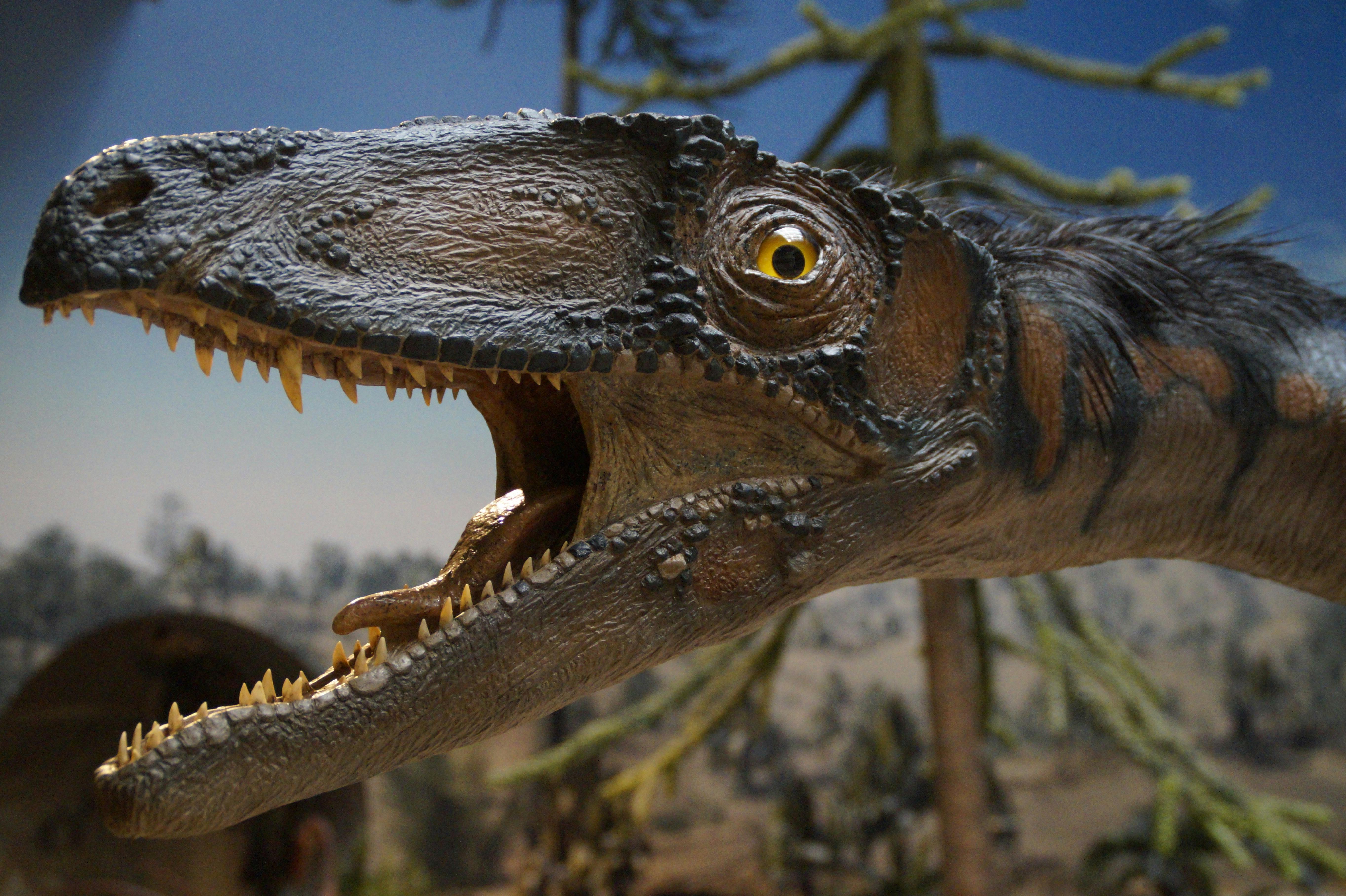
**Summary:** Explore how Dinosaurs dominated Earth during the Mesozoic Era (Triassic, Jurassic, Cretaceous periods), ruling for over 165 million years.
Dinosaurs achieved dominance largely due to their skeletal and metabolic advantages following the Triassic-Jurassic extinction event, which wiped out many competitors.
Dinosaurs ruled the terrestrial world during the Mesozoic Era (c. 252 to 66 million years ago). Their unparalleled success stemmed from evolutionary innovations and lucky timing following the Triassic-Jurassic extinction event, which wiped out competitors and left vast ecological niches open.
The key was the devastating Triassic-Jurassic extinction event (c. 201 million years ago), which cleared the ecological landscape. Early dinosaurs possessed anatomical traits that gave them a significant competitive edge over surviving reptiles:
The Jurassic Period (c. 201–145 million years ago) saw an explosion in size and diversity.
The long-necked, massive herbivores like Brachiosaurus achieved record-breaking size due to efficient neck-based grazing, indeterminate growth, and potentially gigantothermy (maintaining heat through sheer mass).
Large Theropods like Allosaurus developed size and predatory efficiency in response to their giant prey.
The Cretaceous Period (c. 145–66 million years ago) was the climax, marked by continental drift and specialized forms.
Their reign only ended due to the **Chicxulub impact** at the Cretaceous-Paleogene (K-Pg) boundary, 66 million years ago. This sudden, catastrophic global disaster, not evolutionary failure, ended the dominance of the non-avian dinosaurs, allowing mammals and the surviving avian dinosaurs (birds) to thrive.